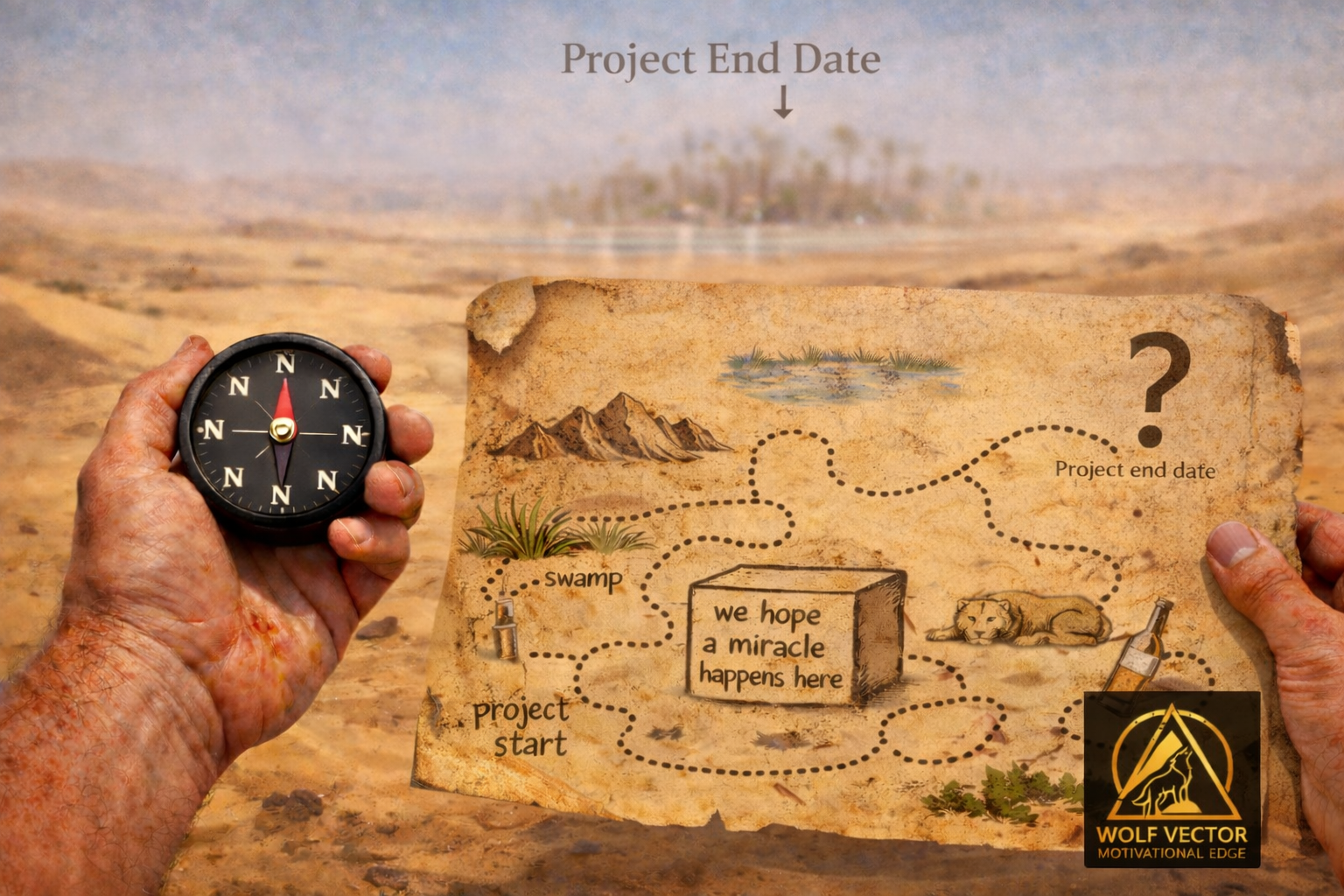
Hope Is Not A Plan
Make it stand out
If your project plan assumes cooperation, perfect data, and zero surprises, it’s not a plan. It’s hope dressed up to look like one.
Hope is unreliable, unpredictable, and rooted in unrealistic expectations of success. As project managers and leaders, we simply cannot do hope.
Early in the days of building our PMO, I asked one of my project managers when their system was going live. The answer was simple: “We hope it will happen next week.”
My response was not what was expected. I asked, “You hope it will happen next week, or you’ve planned for it to happen next week?” Then I said, “Show me where ‘next week’ is on the calendar.”
Silence.
That moment wasn’t about being sarcastic. It was a teaching moment.
As project managers, we are not paid to hope. We are not paid to deliver a product sometime next week. We are paid to plan, to manage risk, to build contingencies, and to make trade-offs visible, all with one objective: deliver a product built to specification, within budget, on a specific date.
Words matter.
When we use language like “we hope,” “we’re optimistic,” or “sometime next week,” we erode trust and confidence every time we use them. Sponsors, executives, and stakeholders don’t lose confidence because something went wrong. They tend to lose confidence when the project manager can’t speak with precision, commitment, and intent.
Hope signals uncertainty in the plan. Vagueness signals a lack of project controls.
Over time, both quietly destroy a project manager’s credibility to deliver on spec, on budget, and on time, every time.
