If Your Definition of Leadership Fits on a Coffee Mug, It Is Probably Out to Lunch
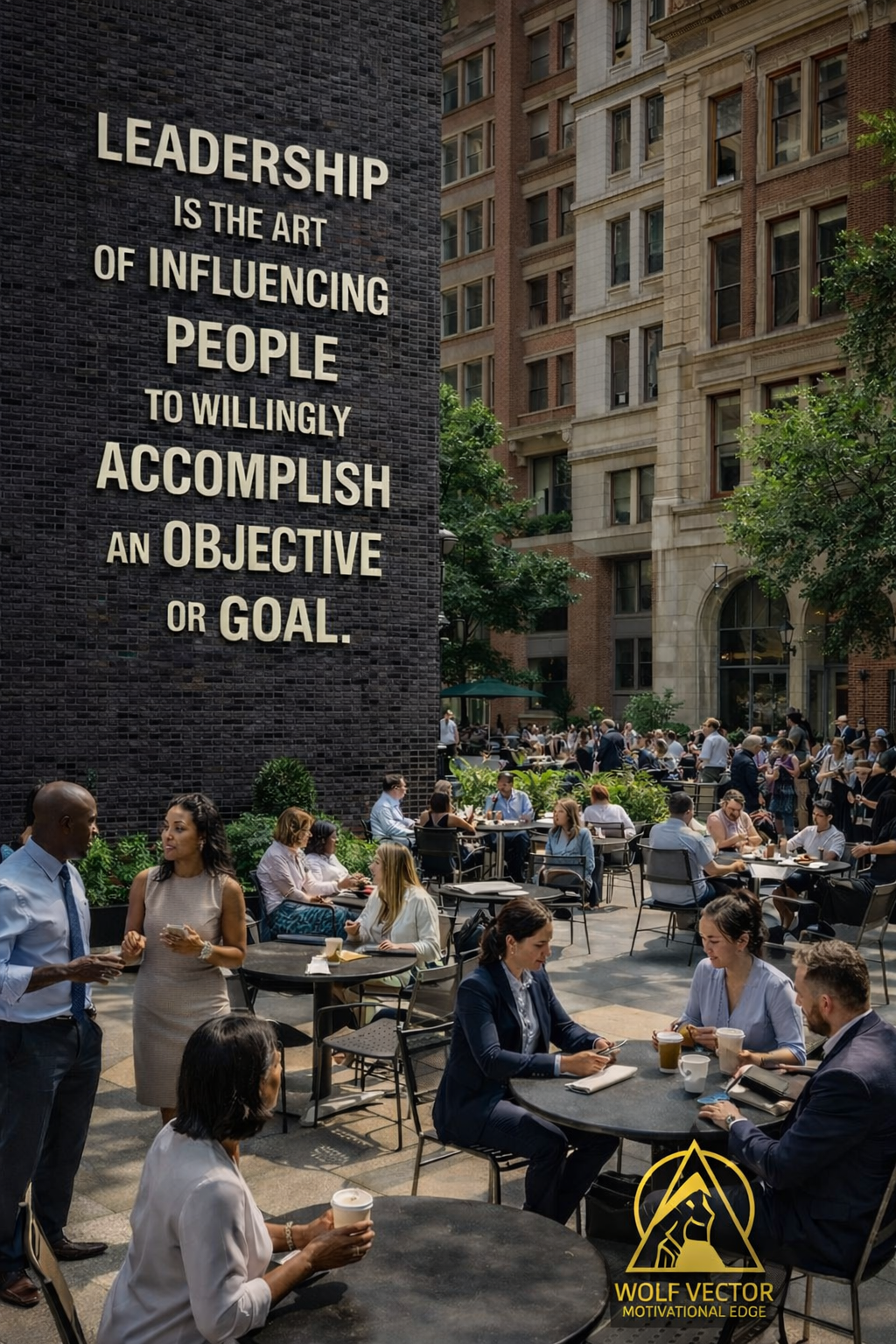
Welcome to The Old School of Leadership.
The no-nonsense, common-sense school of leadership and leading.
Class is now in session.
There is a lot of confusion today about what leadership is, and what it is not.
That confusion did not come out of nowhere. Many people are promoted into their first leadership role with almost no preparation for what the job actually demands. They get the title, the fancy office, the meetings, and the expectations. What they do not get is a real grounding in what leadership requires when people are depending on them and the work matters.
So they piece it together from what they see around them. A little bit from social media. A little bit from corporate slogans. A little bit from personality-driven advice. A little bit from whatever is fashionable this month.
That is how we end up with definitions of leadership that sound nice, look good on a poster, and fall apart the moment the work gets hard.
A lot of people talk about leadership as though it is a personality trait.
It is not.
Leadership is not charisma.
It is not volume.
It is not visibility.
It is not popularity.
It is not a feeling.
It is not a polished personal brand.
It is not a fancy title sitting on an org chart.
And it is certainly not another shallow slogan printed on a coffee mug.
Old school leadership starts with a much simpler idea.
My definition of leadership takes the crisis-tested, time-proven definition of Canadian General Jacques Dextraze, who I regard as the architect of the present-day Canadian Forces leadership ethos, and adds a small twist:
Leadership is the art of influencing people to willingly accomplish an objective or mission through the standards, tools, techniques, sequence, and timelines established by the leader.
There is a lot packed into that single sentence. More than most modern leadership content gets into in a whole article, podcast, or workshop.
Let’s break it down.
Leadership Is an Art
It starts with the word art.
That matters because people are not machines. They are not numbers on a dashboard. They are not interchangeable parts.
People do not all respond the same way. They do not all bring the same background, confidence, fears, pride, scars, or ambition to the job. One person needs direction. Another needs coaching. Another needs space. Another needs a hard conversation. Another needs someone to believe in them before they believe in themselves.
That is why leadership can never be reduced to a script.
There is judgment involved. Timing involved. Reading the moment involved. Knowing when to step in and when to step back involved. Knowing when to push, when to teach, when to correct, and when to simply listen involved.
That is art.
Leadership Is About Influencing People
The next important phrase is influencing people.
Not managing tasks.
Not forwarding emails.
Not quoting policy from a safe distance.
Not sitting in meetings and speaking words no one understands while somebody else carries the real burden of execution.
Leadership is personal because people are personal.
You are dealing with human beings. They are the ones doing the work, facing the pressure, handling the uncertainty, and carrying the weight when the outcome matters. If you cannot influence people, then your title may say manager, director, executive, or team lead, but leadership is not actually happening.
The work moves through people.
That means leadership is not measured by how many emails you send or meetings you hold. It is measured by whether people understand what matters, know what “finished” looks like, and are willing to move toward the objective with purpose.
Willingly Is Not a Throwaway Word
Then there is the word willingly.
That word matters more than most people realize.
Compliance can be forced.
Obedience can be demanded.
Attendance can be tracked.
Tasks can be assigned.
Deadlines can be imposed.
But real followership cannot be manufactured through pressure or presence alone.
People may do the minimum because they have to. They may show up because they need the paycheque. They may nod in agreement because arguing with the boss is too expensive.
That is not leadership.
Leadership shows up when people are willing to commit themselves to the work. When they understand the objective. When they trust the person leading them. When they know the standard. When they believe the leader is serious, competent, and worthy of being followed.
You can order compliance. You have to earn willing effort.
That distinction matters.
Leadership Is Pointed at an Objective
The next phrase is objective or mission.
Leadership is not vague.
It is not floating in the air.
It is not a mood.
It is not an identity.
It is pointed somewhere.
There is something to do. There is a result to deliver. There are people involved. There is a standard to meet. There is a timeline attached. There is accountability attached.
In real workplaces, leaders exist because something important needs to happen and it is not going to happen by accident.
That is one of the problems with so much modern leadership commentary. It talks about leadership as though it lives entirely in the world of inspiration and self-expression. But leadership is not performance. Leadership is directed effort in service of a result.
It is not enough to be admired.
It is not enough to be well-liked.
It is not enough to be visible.
The question is simple:
Can you move people toward the objective and get the job done properly?
This Is Where the Work Lives
Then we get to the part many people want to skip:
Standards
Tools
Techniques
Sequence
Timelines
This is where leadership leaves the motivational poster and enters the real world.
This is where the work lives.
Leaders do not just say, “Great job, team.” They set the standard for what acceptable looks like.
Leaders do not just talk about values. They make decisions when those values cost something.
Leaders do not just encourage people. They train them well enough to perform under pressure.
Leadership is not just having a vision. It is turning that vision into actions, sequence, priorities, timing, and discipline.
This is where leaders earn their keep.
What do you accept?
What do you correct?
What do you reinforce?
What do you walk past?
What do you teach?
What do you tolerate?
What do you do when the pressure comes on?
That is leadership.
Not slogans. Not trendy memes. Not management theatre.
Strip Away the Nonsense
When you strip away the fancy language and the new-age nonsense, leadership gets very plain, very quickly.
Set the standard.
Make the best decisions you can.
Look after your people.
Train them well.
Get it done.
That is not simplistic. It is fundamental.
And fundamentals matter because the pressures of business eventually exposes what is real.
When the deadline tightens, when the budget shrinks, when the plan takes a nosedive, when the team gets tired, when mistakes show up, when people are frustrated, when the customer is unhappy, when the senior leader wants answers, the slogans are no longer enough.
At that point, leadership either exists or it does not.
That is why I have more respect for tested leaders than fashionable leadership theories and memes.
Tested leadership has weight to it. It has standards. It has judgment. It has discipline. It has backbone. It knows the work is about people, performance, and results, all at the same time.
That is old school leadership.
Not old-fashioned.
Not outdated.
Not rigid for the sake of being rigid.
Just grounded. Proven. Usable. Real.
And in a world full of shallow leadership content, real is becoming harder to find.
So yes, if your definition of leadership fits neatly on a coffee mug, it is probably wrong.
Because leadership is not a slogan.
It is an art.
It is influence.
It is willing effort.
It is mission-focused work.
It is standards put into action through people.
That is where the art begins.
And that is where the AI-generated memes end.
