Leaders Need to Stop Talking and Start Communicating
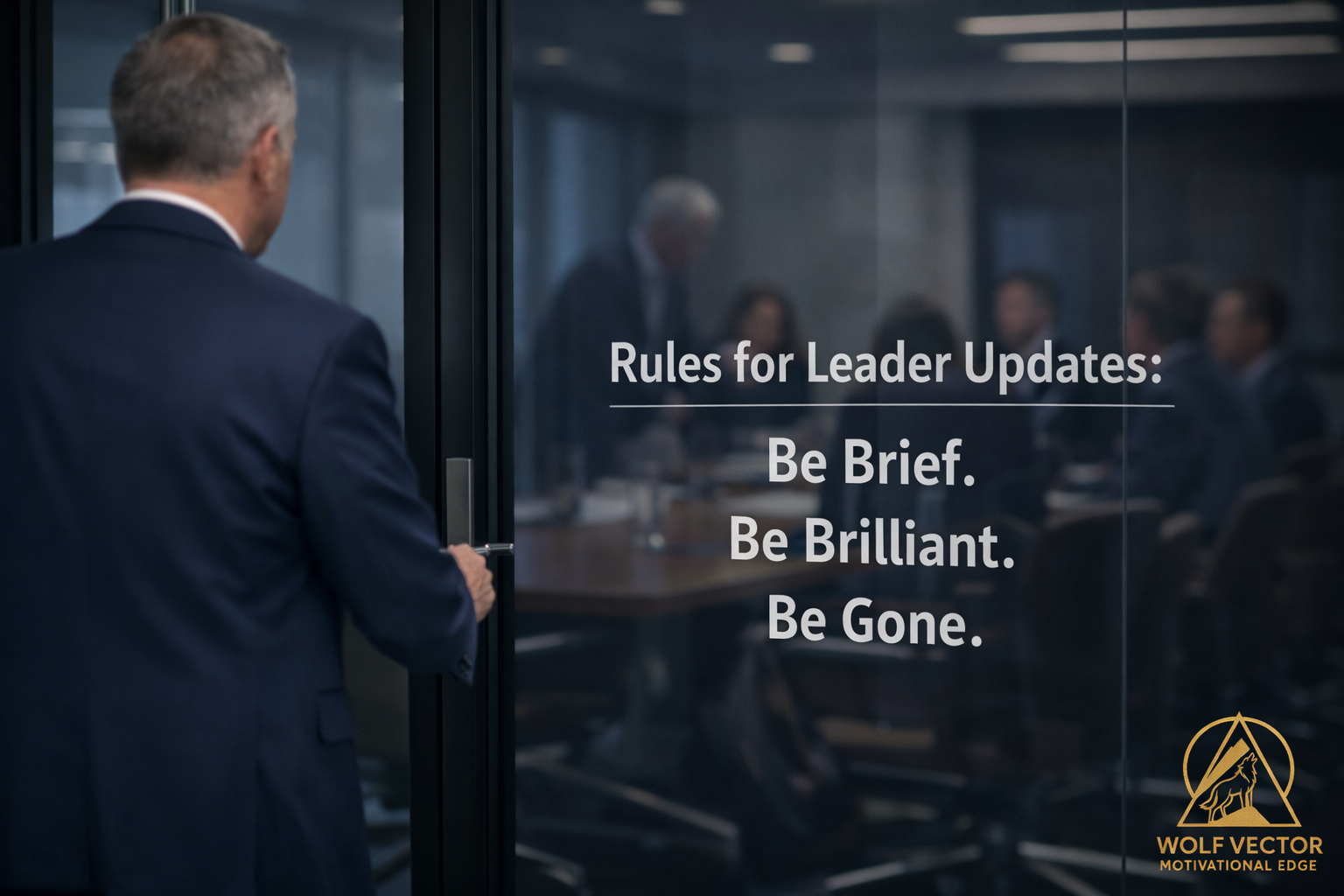
There is a point in every meeting where a leader keeps talking, but the team has already stopped taking anything useful from it.
After that, people start filling in the blanks for themselves.
One person leaves with one understanding. Another leaves with something different. A third is not sure what happens next but does not want to admit it. That is how execution starts to break apart before the real work even begins.
A lot of failure in leadership is not failure of effort.
It is not failure of intent.
It is failure to communicate.
Usually not because too little was said.
Because too much was.
Leaders talk too long.
They explain too late.
They use bigger words than the moment needs.
They bury the main point under background, side comments, and unnecessary detail.
Then they assume people understood.
That assumption is expensive.
A leader does not get extra points for sounding important.
A leader gets results when people leave knowing four things:
What is happening
What matters most
What needs to be done
Who is doing what next
That is the test.
If your team cannot answer those four questions after you speak, you failed Leadership 101.
The Problem Is Not Talking. It Is Undisciplined Talking.
Many leaders confuse airtime with impact.
They think longer explanations make them sound more informed, more thoughtful, or more in command. Usually it does the opposite. The longer they talk, the more the message gets diluted.
People stop listening.
They start filtering.
They start interpreting.
They start guessing.
Now the team is moving, but not in the same direction.
That is not communication.
That is noise with authority attached to it.
A Rule Worth Keeping
One of the best communication rules I have picked up came from a recent leadership course through the Navy SEAL Foundation:
Be brief. Be brilliant. Be gone.
That is not about being rude.
It is not about being cold.
It is not about barking orders and disappearing.
It is about discipline.
Say what matters.
Give the direction.
Set the standard.
Confirm the next move.
Ask if there are questions.
Then get out of the way and let people work.
That is what strong leadership communication looks like.
What Good Leadership Communication Actually Does
Good communication does not try to impress people.
It helps people move with purpose and an understanding of what they need to do and when they need to have it done.
It gives them the point early. It tells them what matters now. It makes the next step easy to understand. It gives people something they can repeat, act on, and execute.
That matters because communication is not a side skill in leadership.
It is a major part of the job.
Leaders shape action through words. They steady a team through words. They create confidence or confusion through words. In many cases, the first move in execution is verbal before it is operational.
So when a leader rambles, the cost is not just annoyance. The cost is hesitation, mixed signals, duplicated effort, missed priorities, and wasted time cleaning up confusion that should never have existed in the first place.
Simple Is Not Weak
Some leaders are afraid to be direct because they think short messages sound unsophisticated.
That is backwards.
Short is not weak.
Direct is not crude.
Simple is not simplistic.
In fact, some of the strongest leadership communication you will ever hear is plain, pointed, and easy to repeat.
That last part matters.
A good message should travel.
If people cannot repeat your direction in simple language, there is a good chance they did not fully absorb it. And if they did not absorb it, they will improvise. One team does one thing. Another person does something else. Somebody waits. Somebody assumes. Somebody runs ahead.
Now the leader is spending time repairing confusion instead of moving the work forward.
Before You Speak, Know the Point
Good leaders do not just talk less for the sake of talking less.
They think harder before they speak.
They know the point before they open their mouth. They lead with what matters. They cut what does not serve the moment. They do not confuse a speech with direction.
That takes discipline.
It also shows respect for the people doing the work.
Adults do not need a performance from their leader every time something needs to happen. They need useful direction. They need the priority. They need the next step. They need to know what good looks like.
Then they need space to do their job.
The Standard
So the next time you speak to your team, resist the urge to say everything.
Say what matters most.
Make the point early.
Tell people what happens next.
Then stop talking.
Because if people leave knowing what is happening, what matters most, what needs to be done, and who is doing what next, you communicated well.
If they leave guessing, you did not lead.
You talked.
